Lower limb
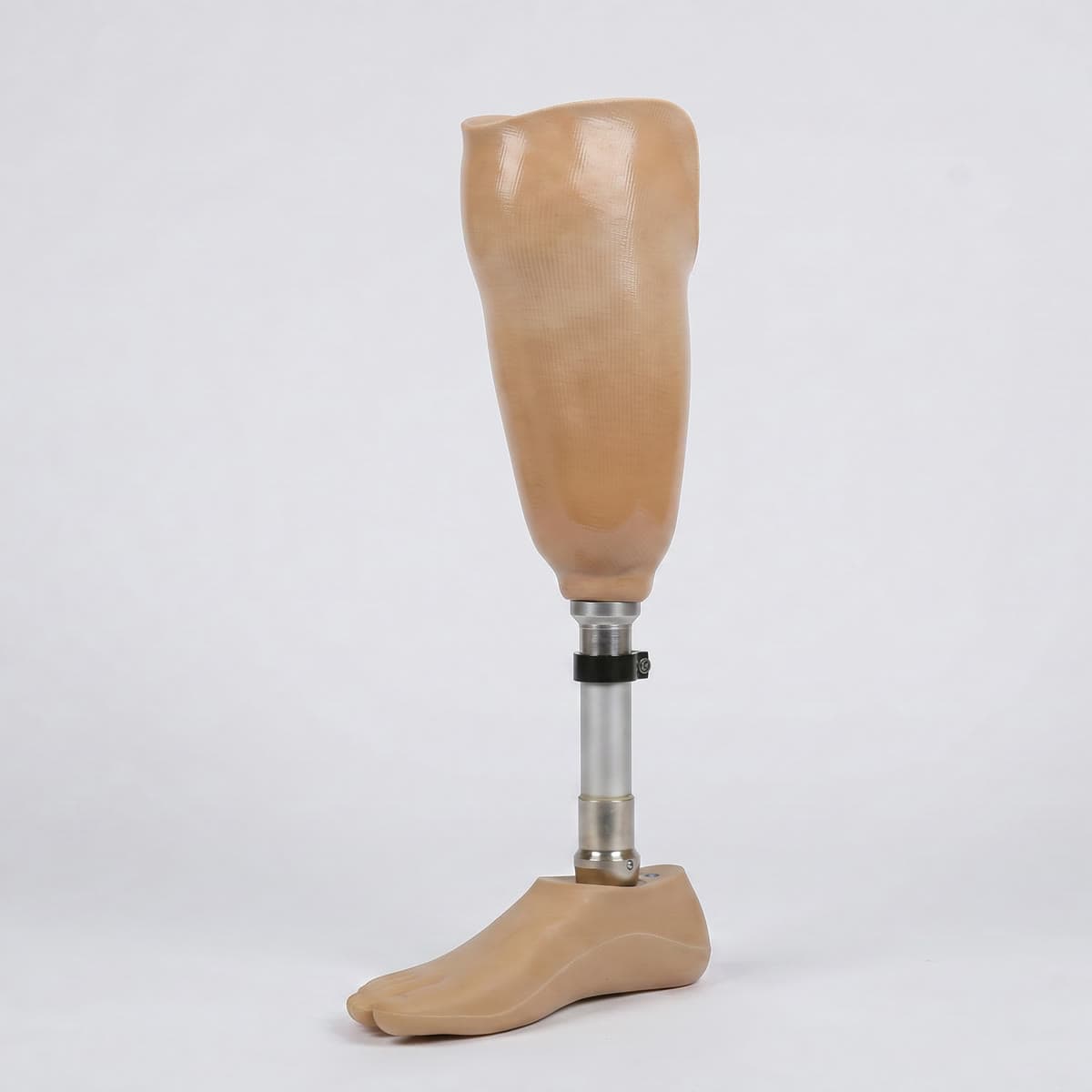
Below-Knee (BK) Prosthesis
Built on a custom socket for amputations below the knee.
01 — Services
Everything we do belongs to one of two crafts — prosthetics, which replaces a limb that is gone, and orthotics, which supports one that is still there. Both are assessed, built and fitted under the same roof in Kabul.
Replaces a limb that is missing.
An artificial leg, foot, hand or arm — built around what remains, so a person can stand, walk and grip again.
Supports a limb that is still there.
A brace, splint or support that holds, aligns or protects a limb or the spine — and takes over where muscle no longer can.
02 — Prosthetics
A prosthesis does more than fill a gap. It carries a person's whole weight, absorbs every step, and has to be trusted completely — which is why each one is built for a single body.
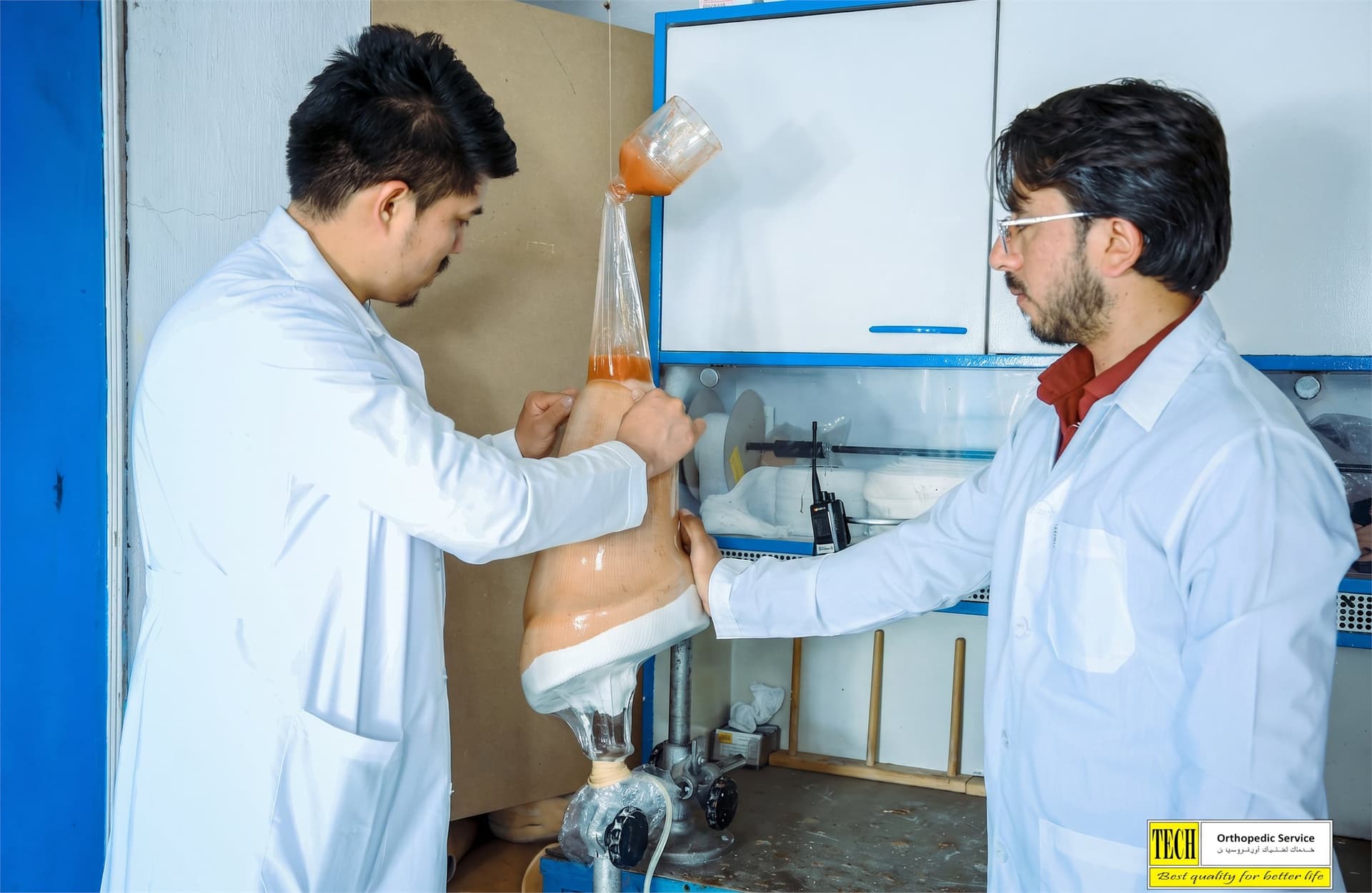
A prosthesis is an artificial replacement for a limb lost to a mine, an accident or illness — or missing since birth.
Every prosthesis is built around its socket: a shell moulded to the exact shape of the residual limb. The socket decides whether a limb is worn all day or left in the corner, so it is cast, shaped, tested and reshaped until the fit is right. Onto it we build the structure — joints, pylon, and the foot or hand — from genuine German components. Fitting is not the end: alignment is tuned as the patient learns to walk, and the socket is remade as the limb settles over the first year.
At a glance
The two families
Legs carry weight. A lower-limb prosthesis must stay stable under load, roll cleanly through every step and survive a full day of walking.
Arms do fine, precise work. An upper-limb prosthesis is judged on grip, on reach, and on how naturally it belongs to the person wearing it.
What we build
Lower limb
Built on a custom socket for amputations below the knee.
Lower limb
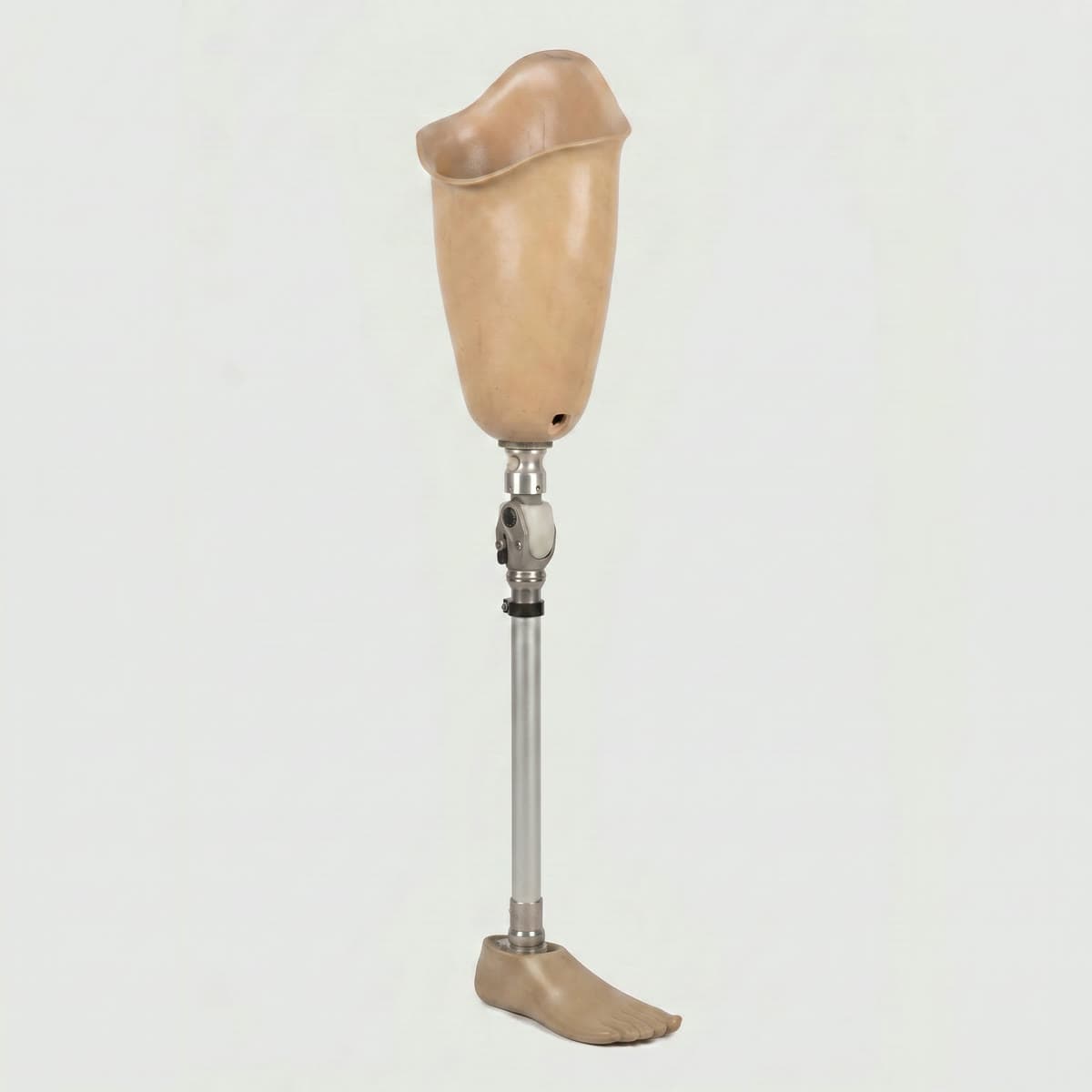
Custom-moulded socket carrying a prosthetic knee joint.
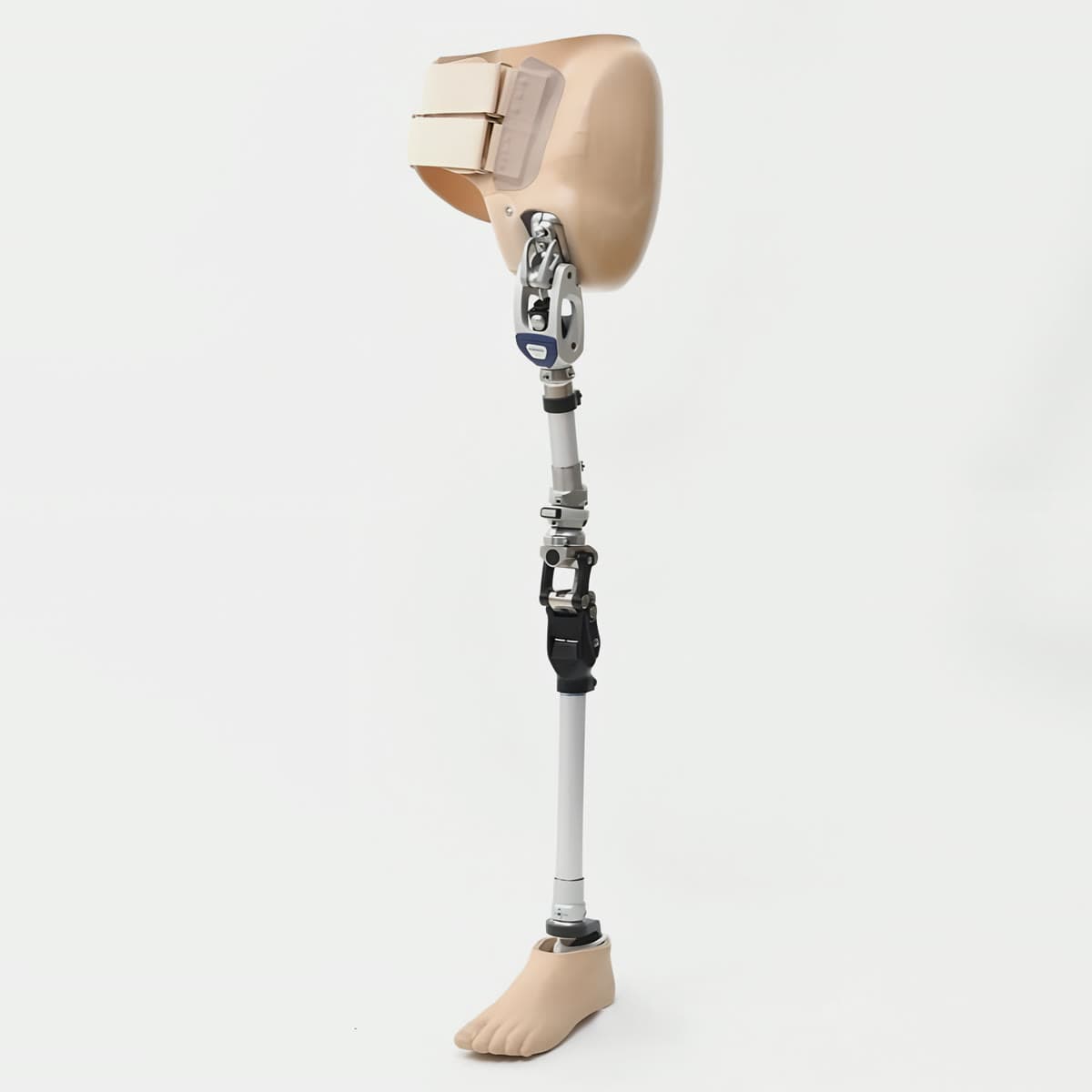
Lower limb
For hip-level amputation — the leg rebuilt from the pelvis.
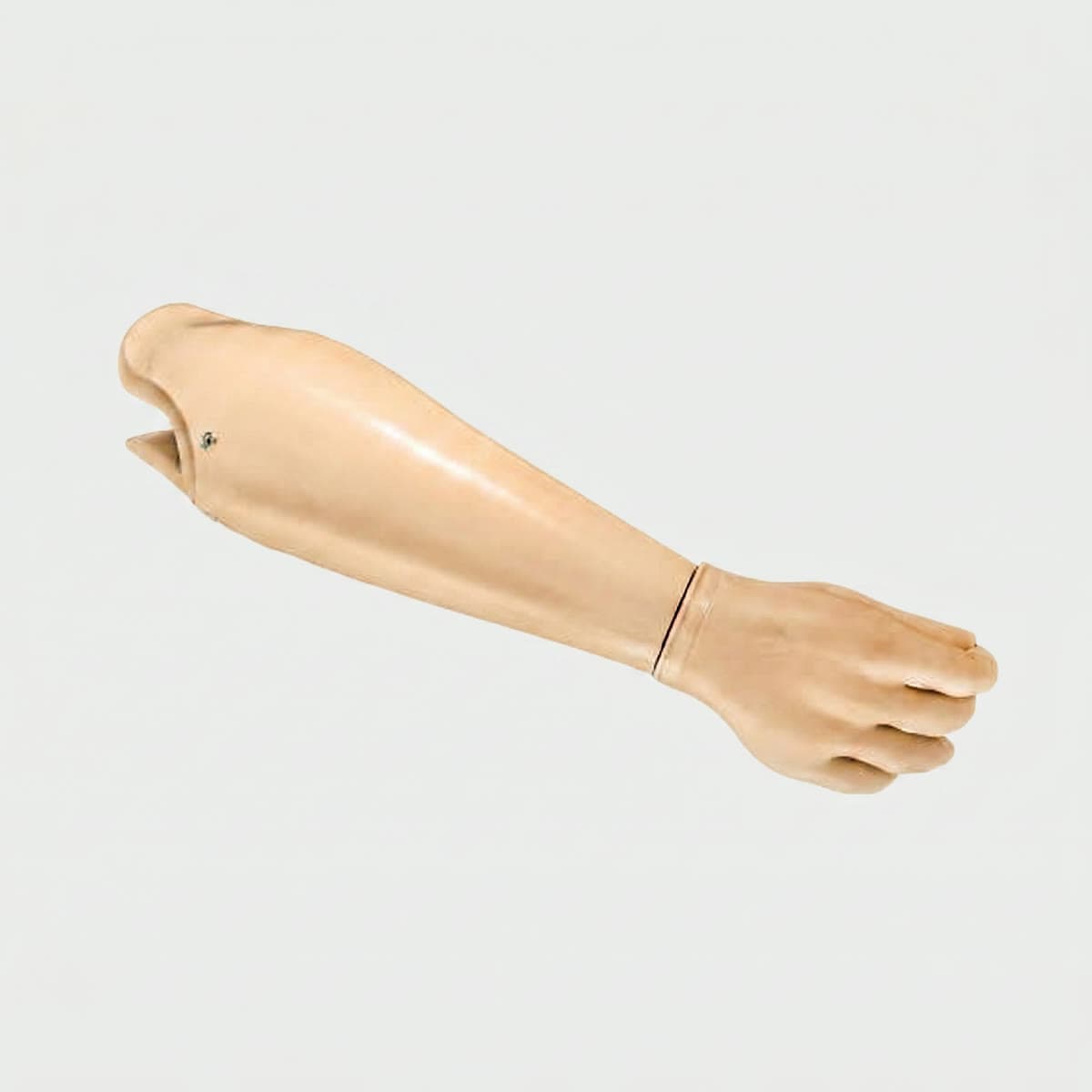
Upper limb
Restores grip and appearance after hand or forearm loss.
03 — Orthotics
An orthosis works with a limb that is still there — steadying a joint, correcting a curve, or doing the work a weakened muscle can no longer do on its own.
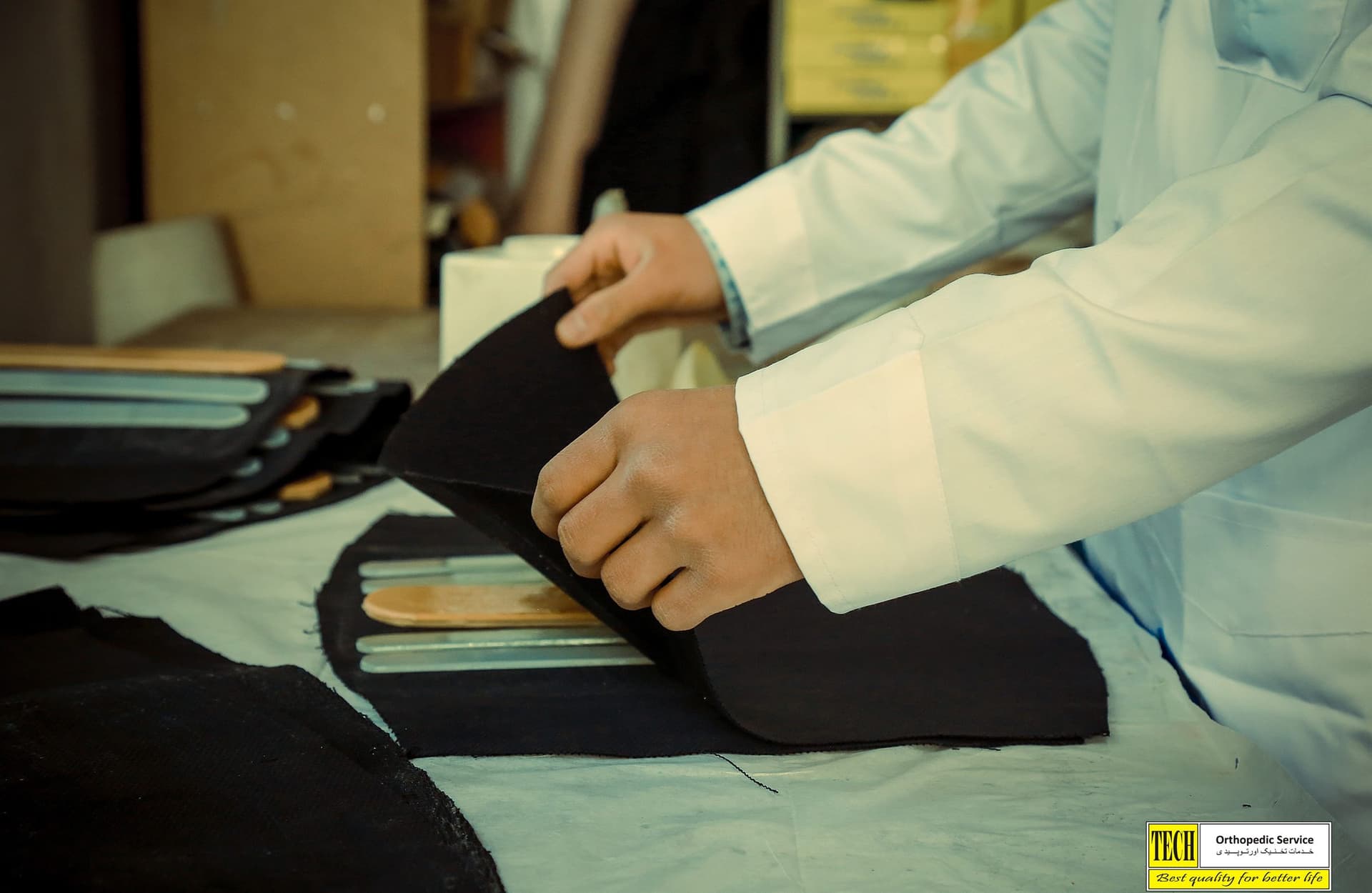
An orthosis is an external device that supports, aligns, protects or corrects a part of the body that is still present — a leg, an arm, or the spine.
Where a prosthesis replaces, an orthosis assists. It can stop an ankle dropping with every step, hold a knee straight enough to stand on, guide a child's foot into position over years of growth, or take the load off a healing fracture. Most are made from sheet plastic and metal, heated and formed over a plaster model of the patient, then lined, riveted and finished by hand. This is where our own fabrication runs deepest — much of it the work of our women technicians.
At a glance
The three families
The largest group by far — devices that make standing and walking possible when an ankle, knee or hip cannot manage it alone.
Braces that support the trunk, limit painful movement, or work against a curve through the years a child is still growing.
Smaller devices — often the difference between a hand that can work and one that cannot be used at all.
What we build
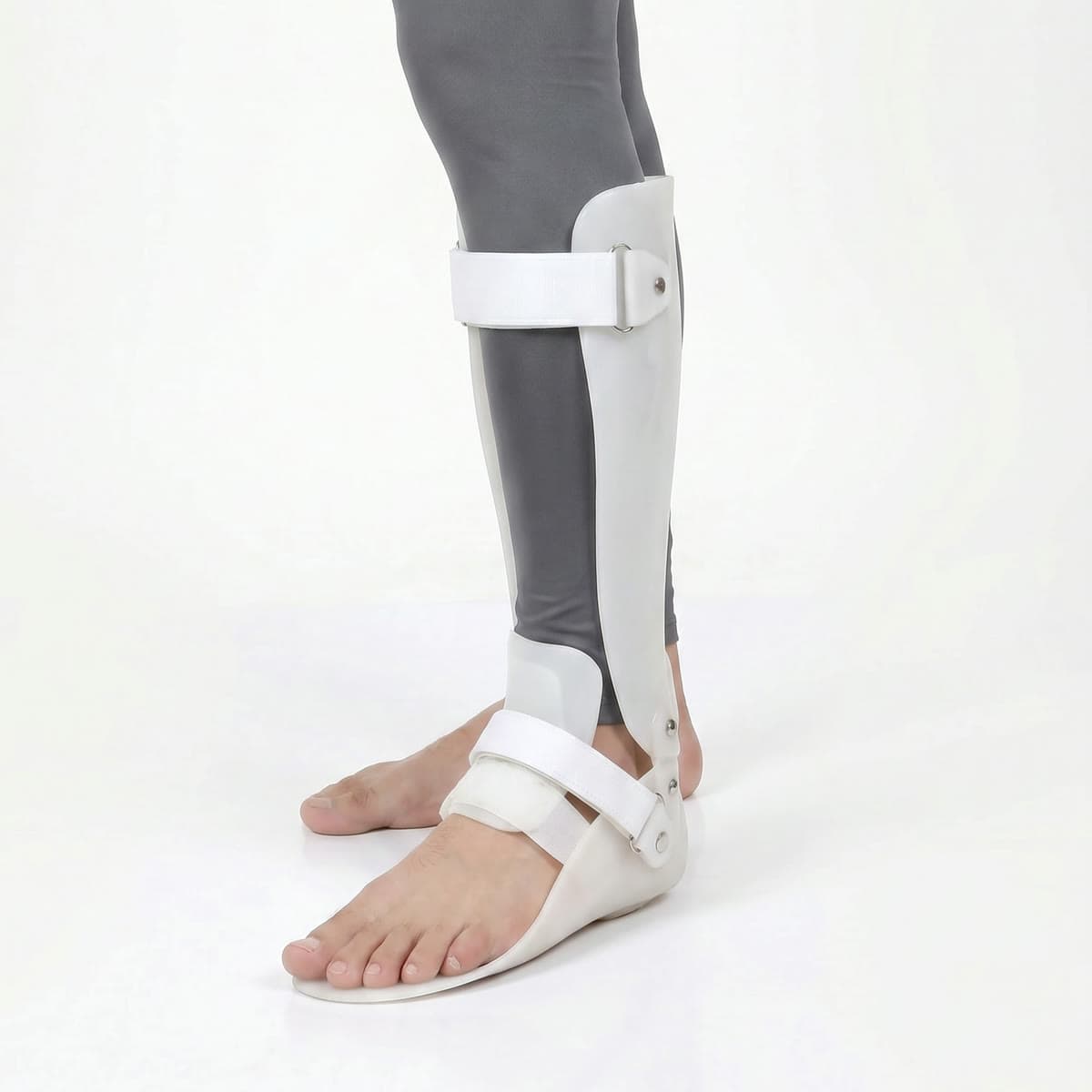
Lower limb
Stabilises the ankle and foot — the device we make most.
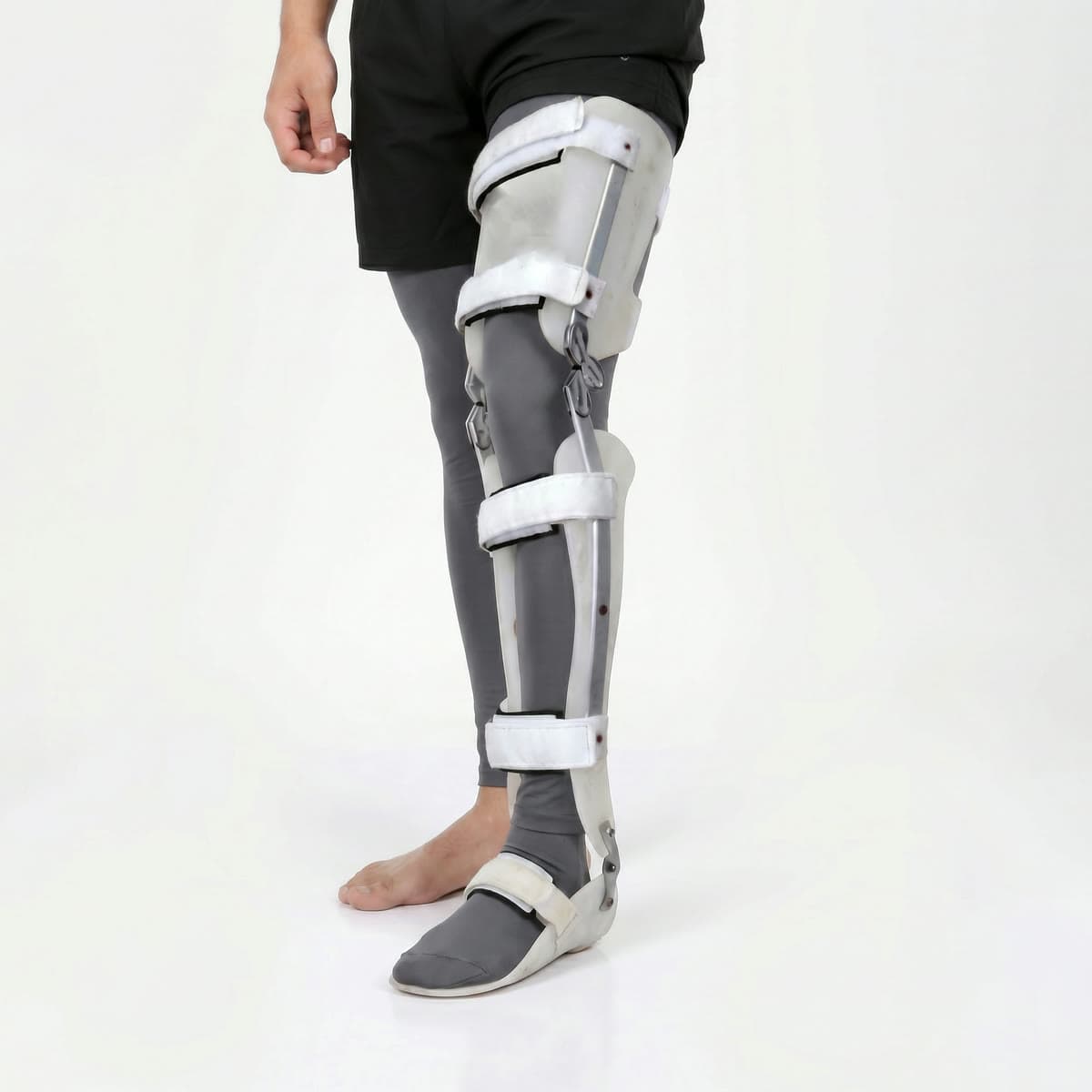
Lower limb
Supports knee, ankle and foot as a single unit.
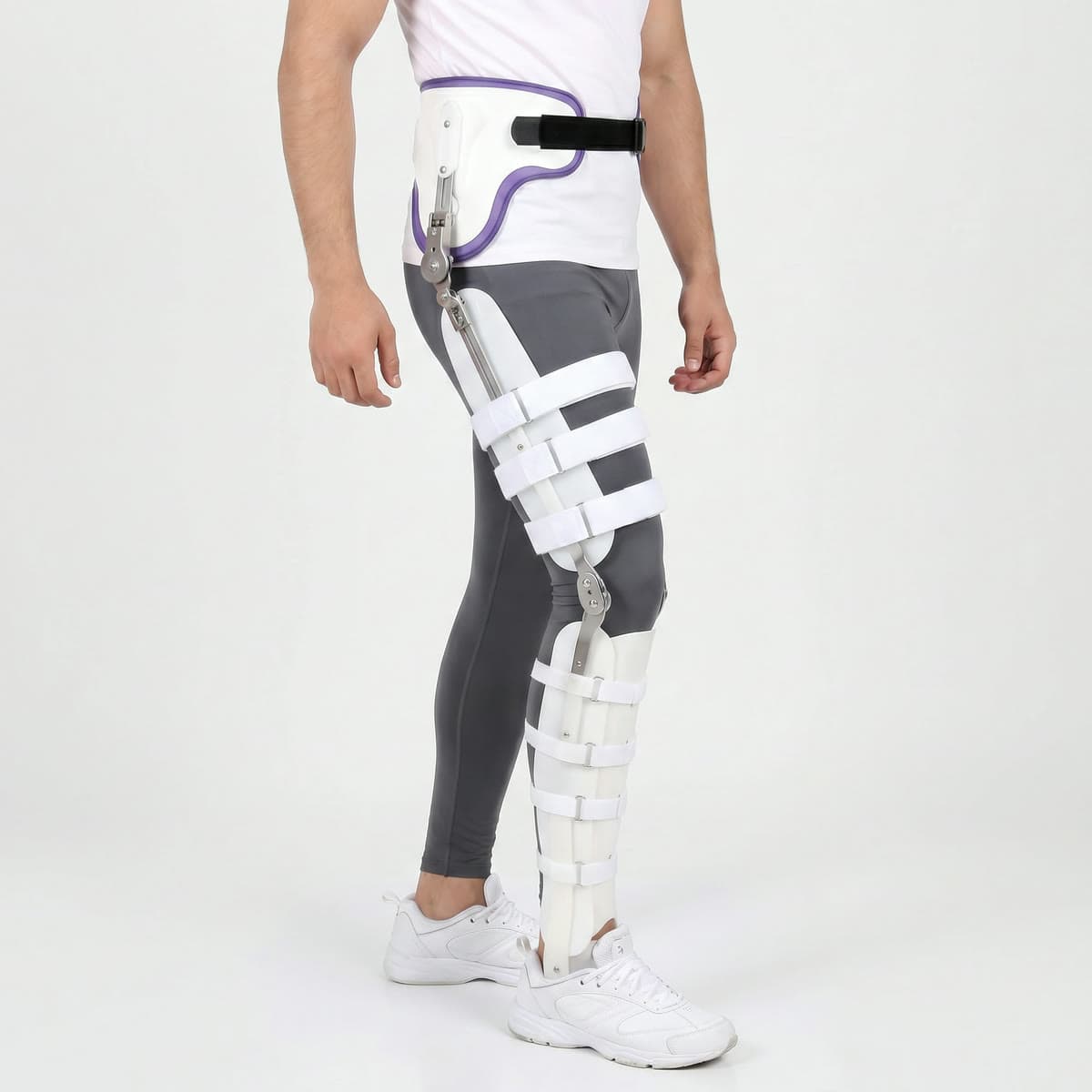
Lower limb
A KAFO extended to a hip joint and pelvic band.
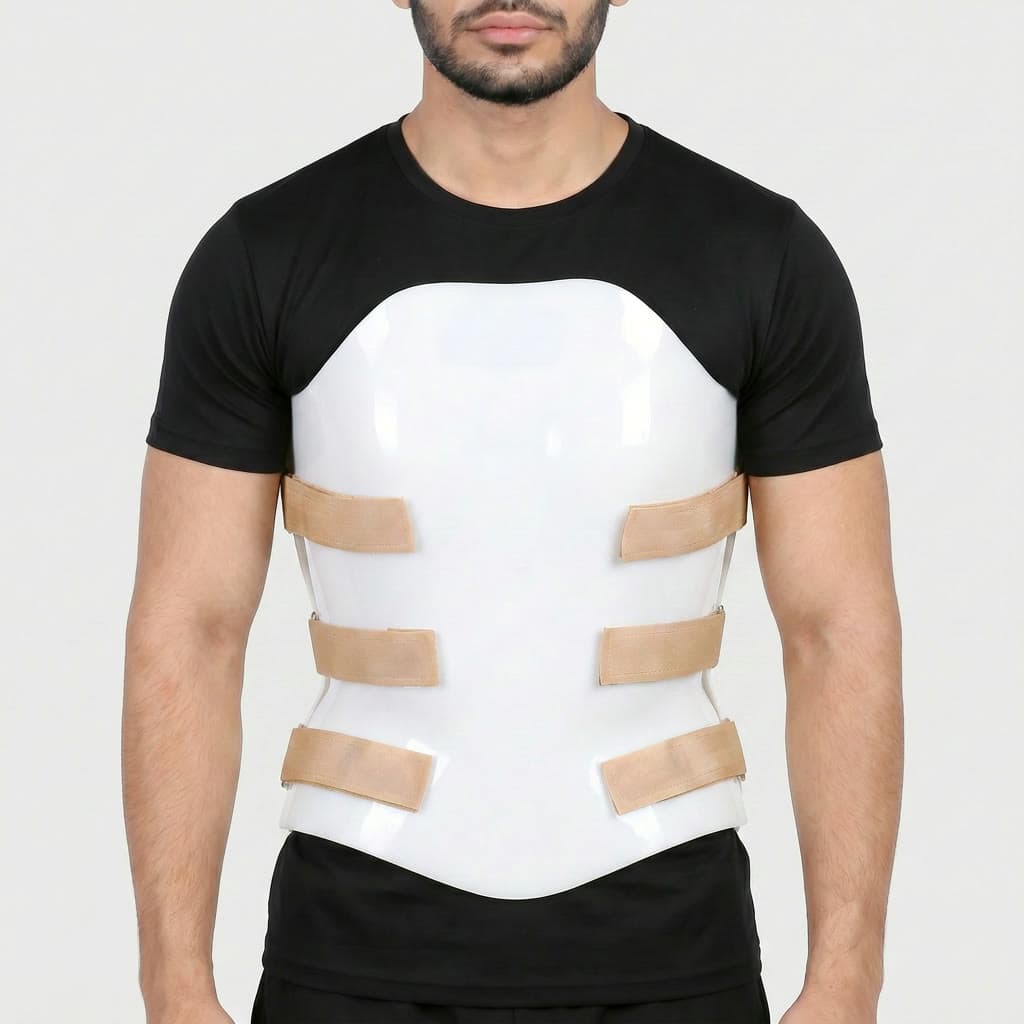
Spinal
Rigid body jacket for the mid and lower spine.
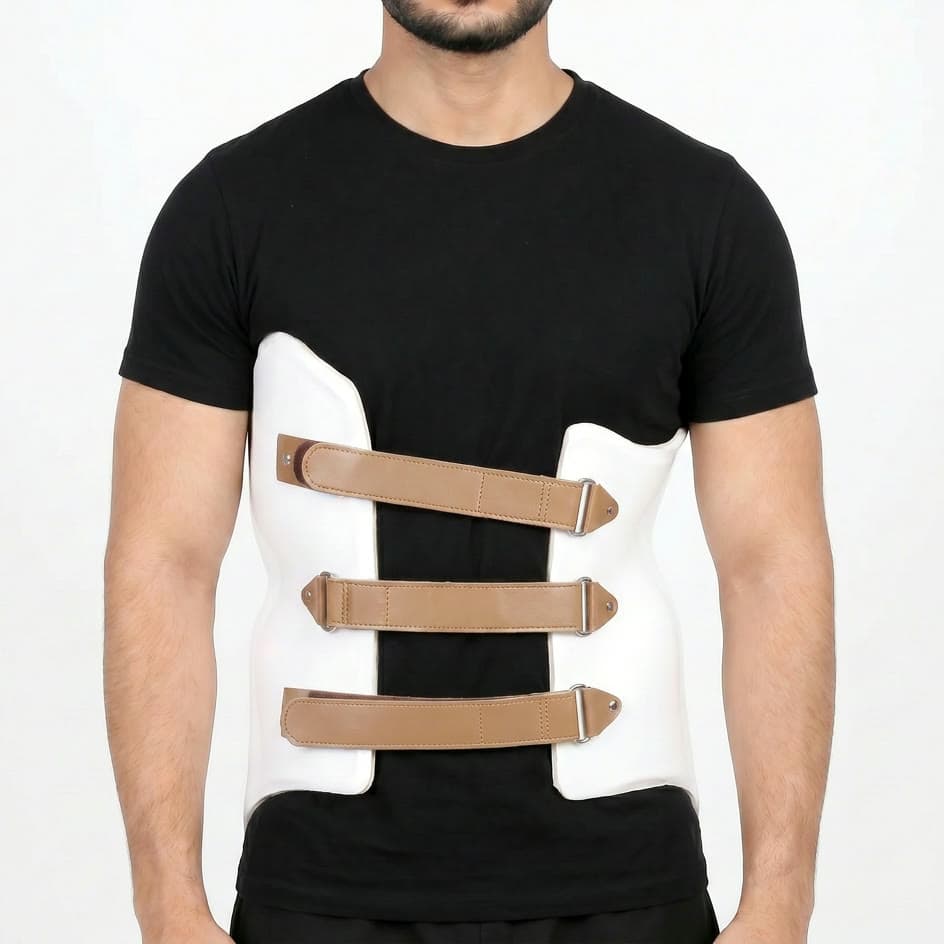
Spinal
Corrective brace that helps control curve progression.
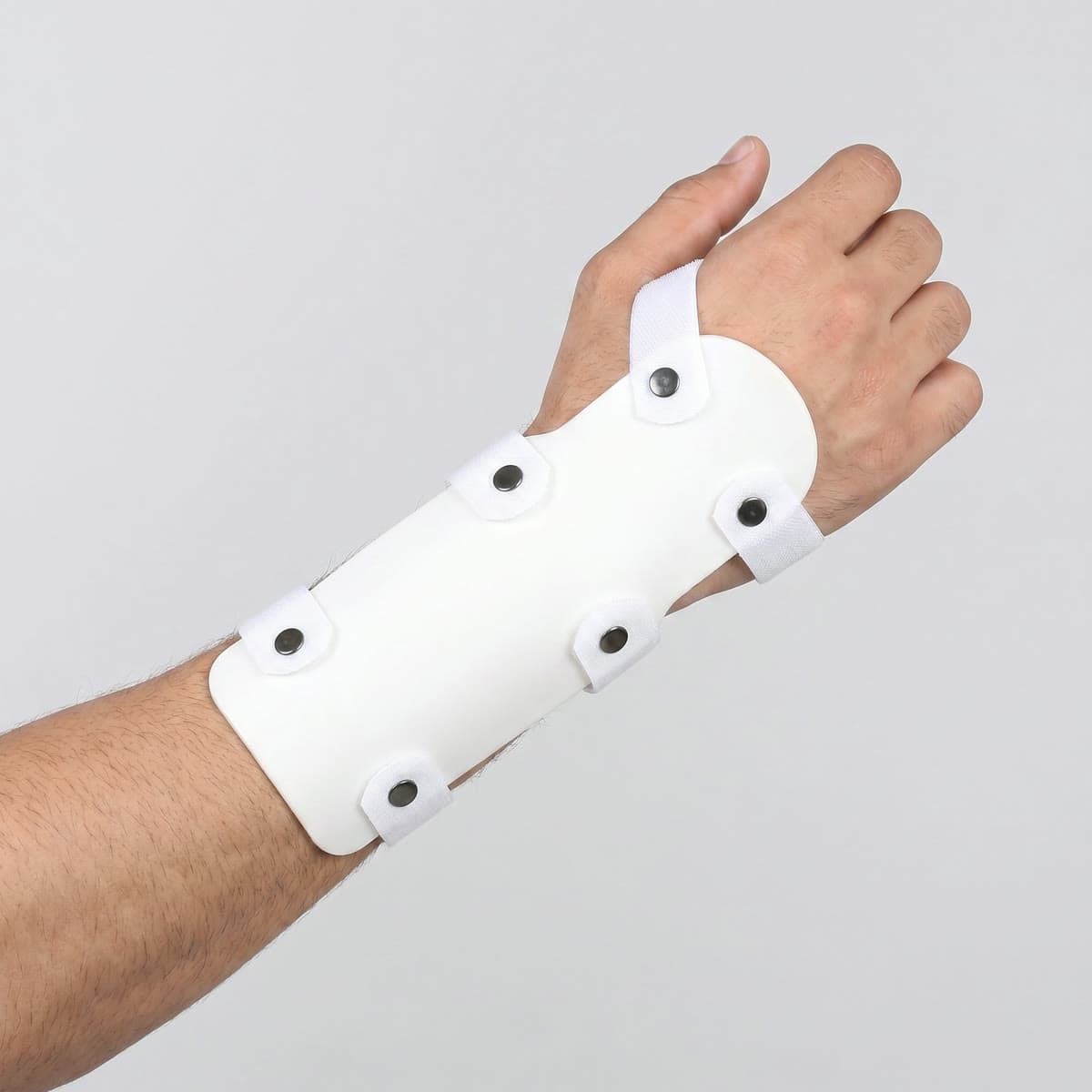
Upper limb
Holds the wrist in a slight upward working position.
04 — Our process
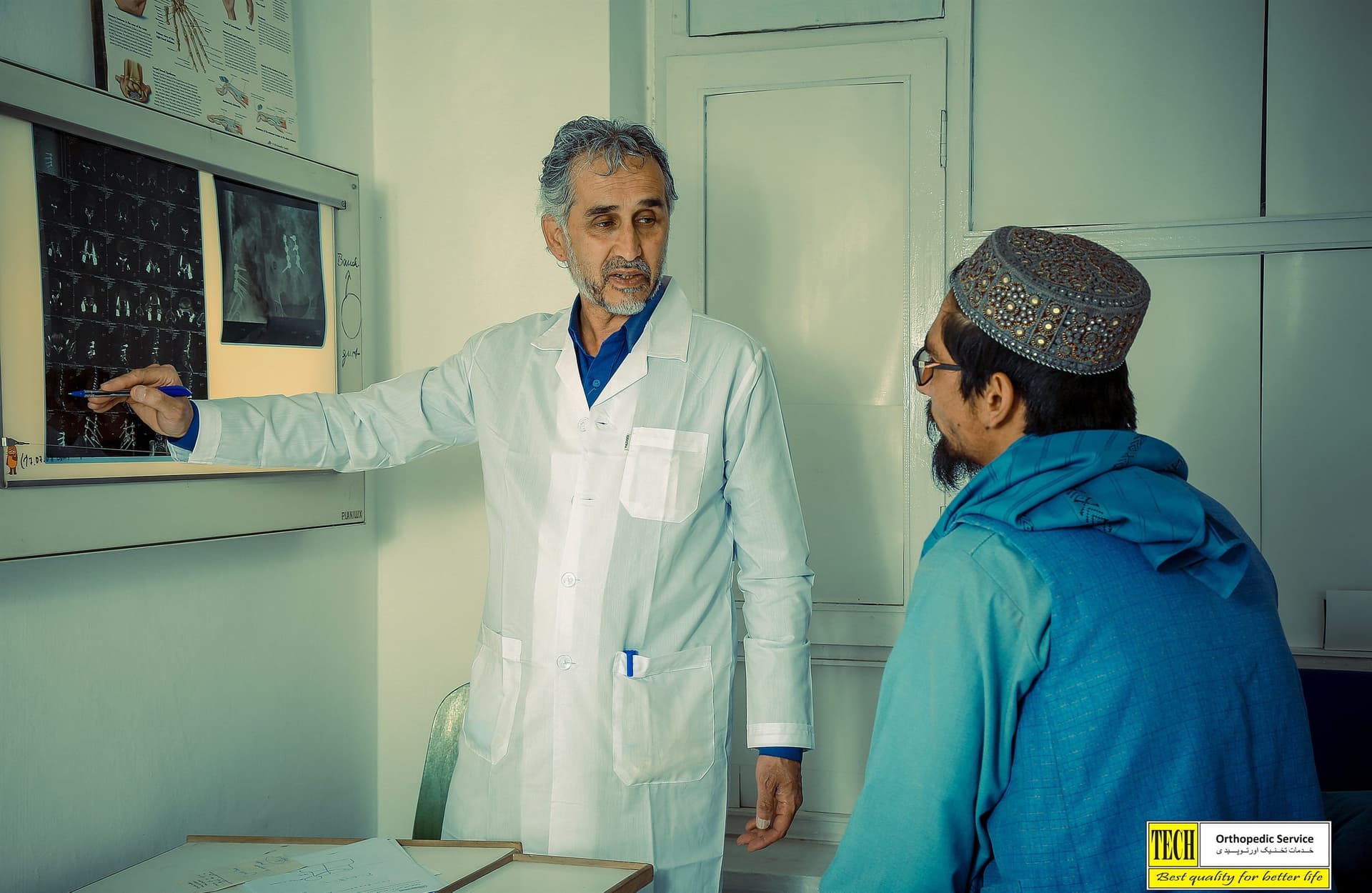
Evaluation of your needs, anatomy and mobility goals.
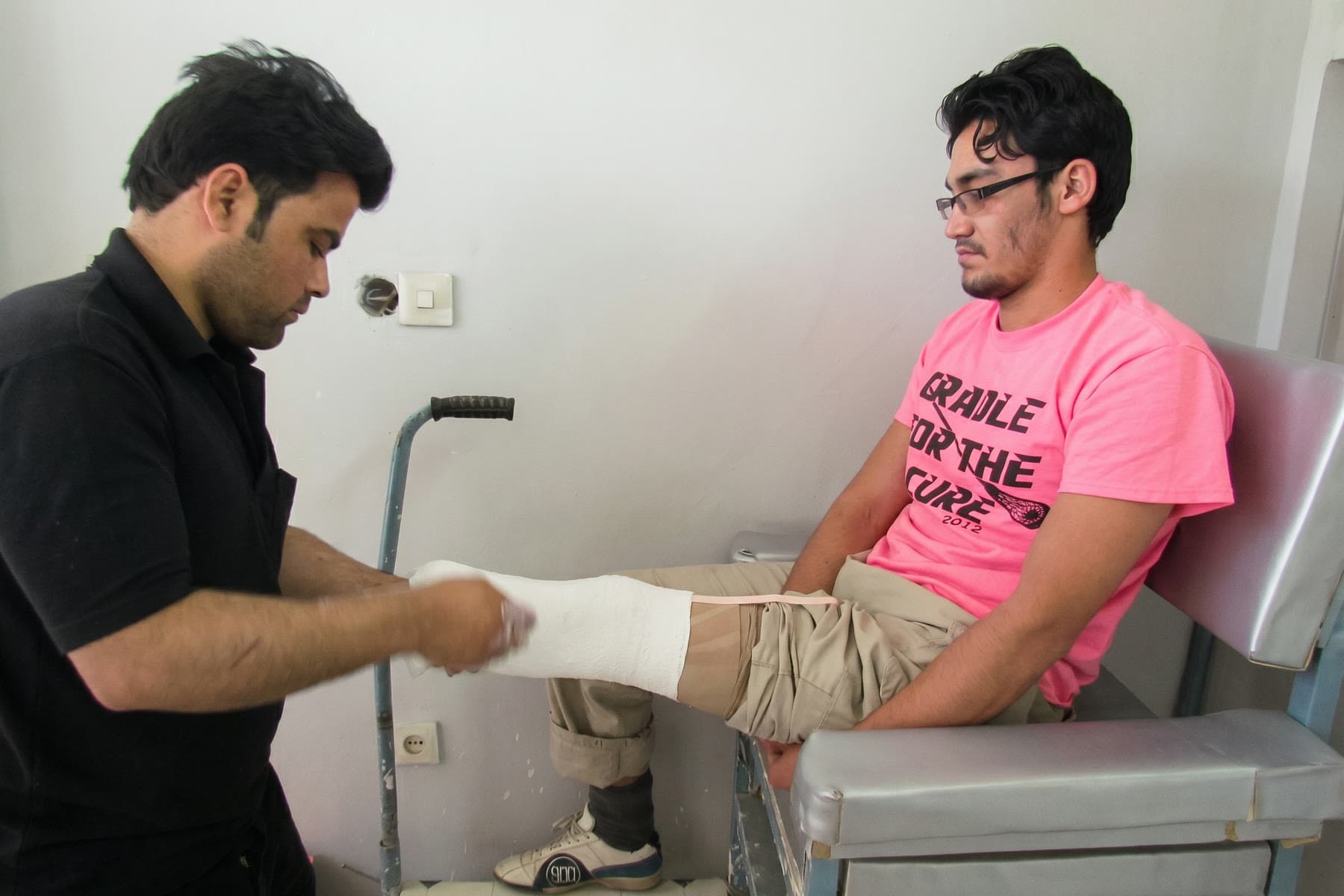
Precise measurements and impressions to capture your anatomy.
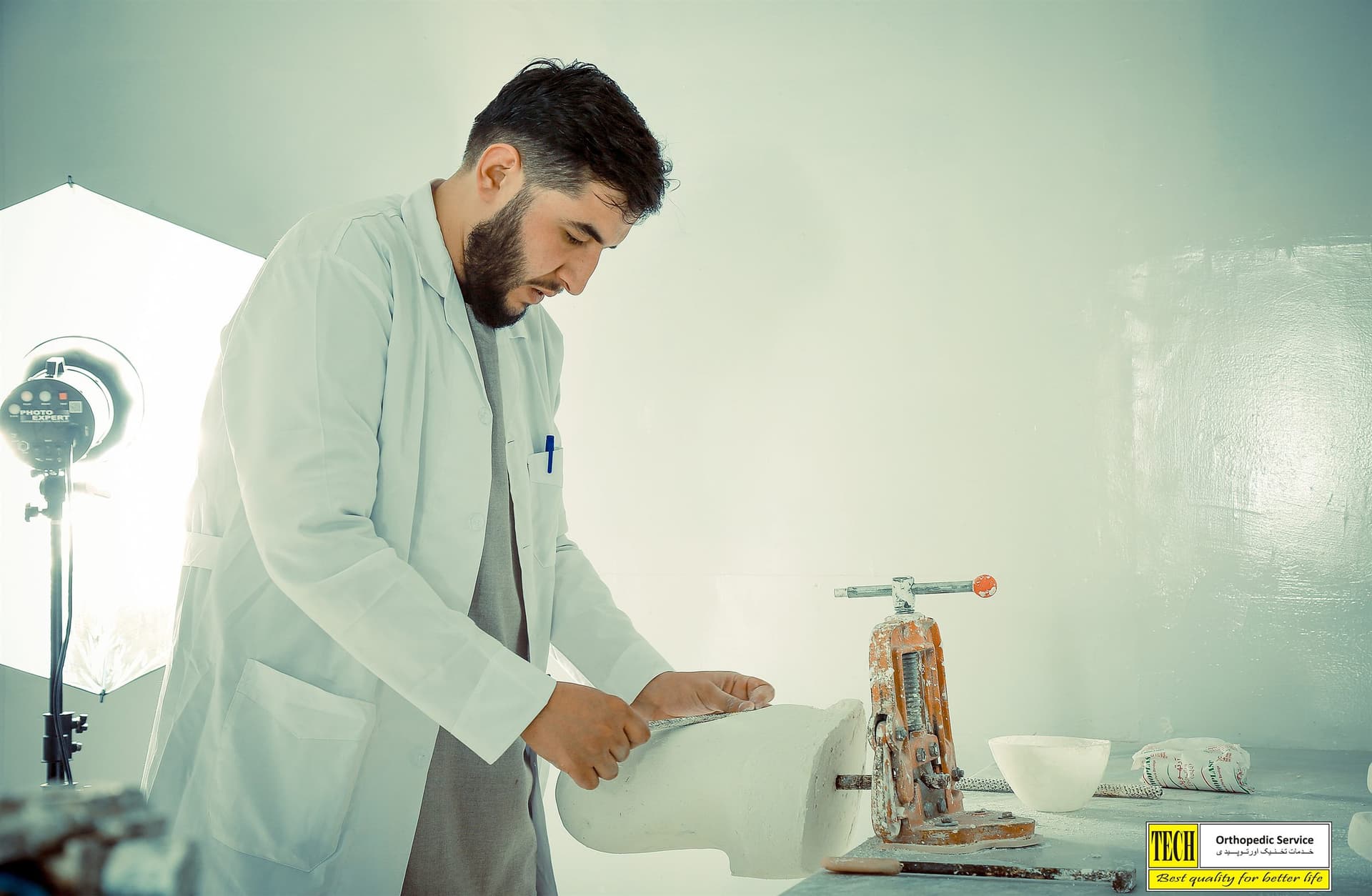
Orthotic supports handmade in-house; prosthetics assembled from genuine German components.
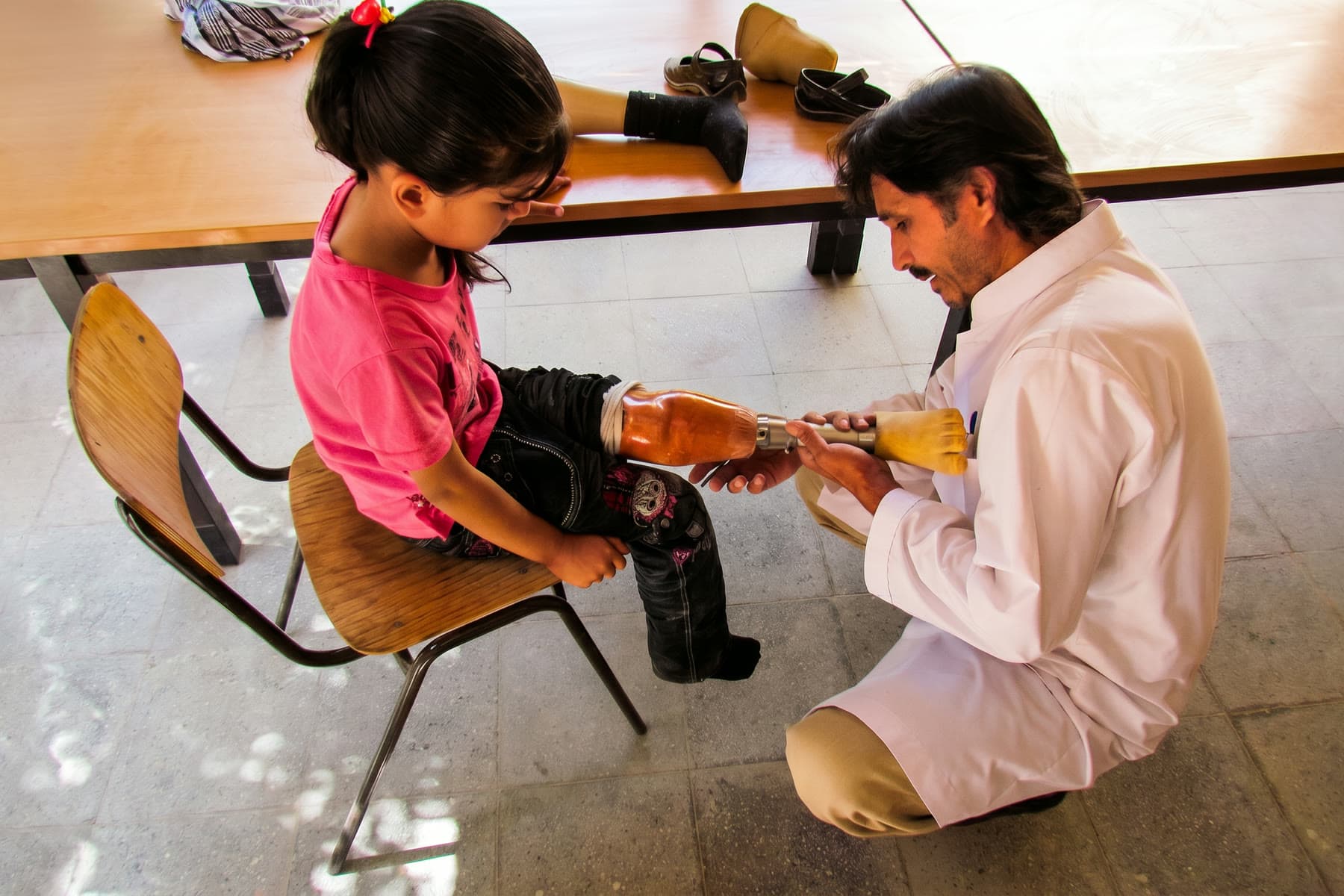
Fitting, alignment, gait training and ongoing adjustment over time.
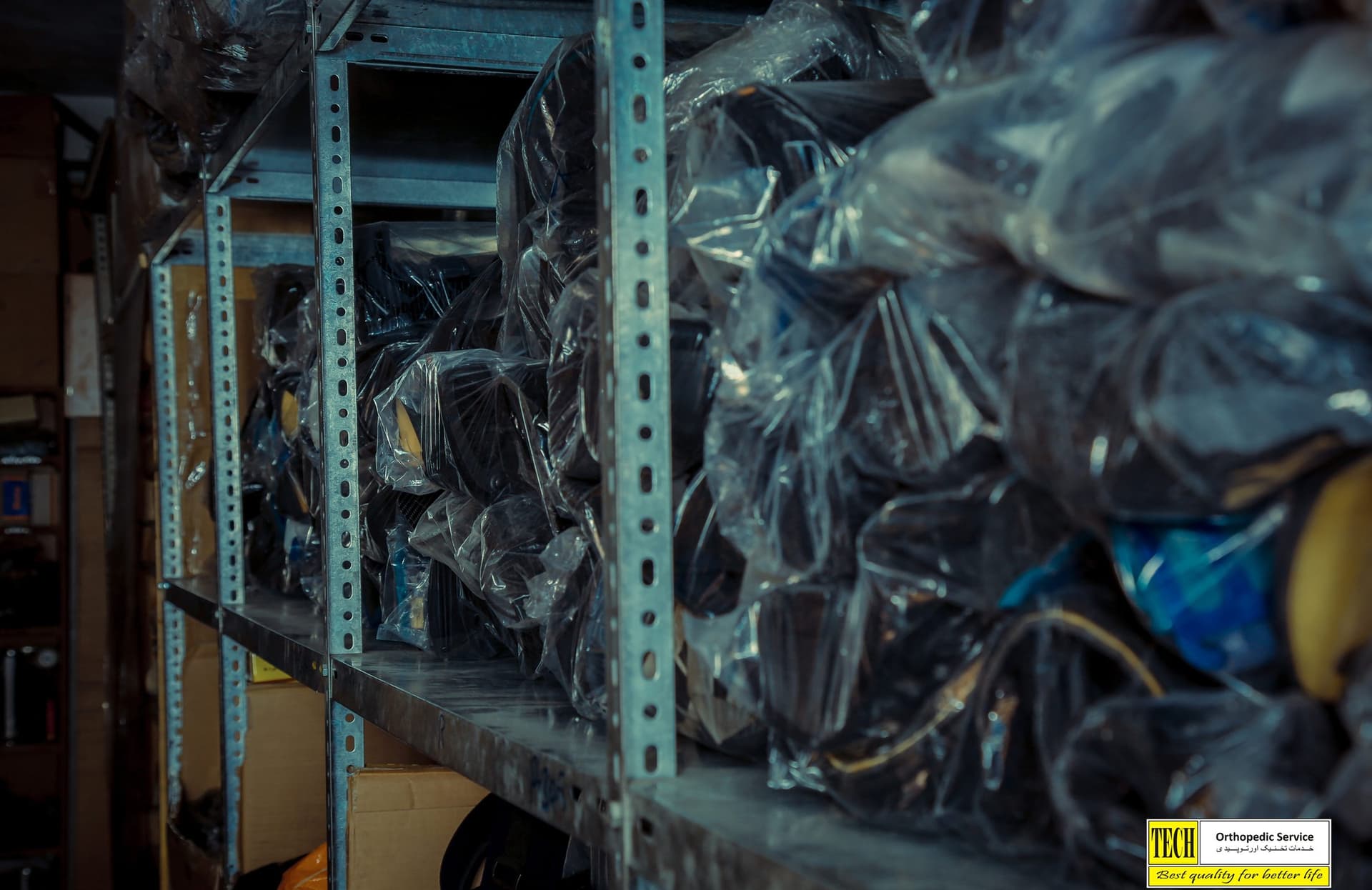
In-house
Hundreds of components, sorted and ready — so your fitting is never the thing that's waiting.
Book an assessment and our team will recommend the right path — no obligation.